


How to Become a Data Analyst Without a CS Degree
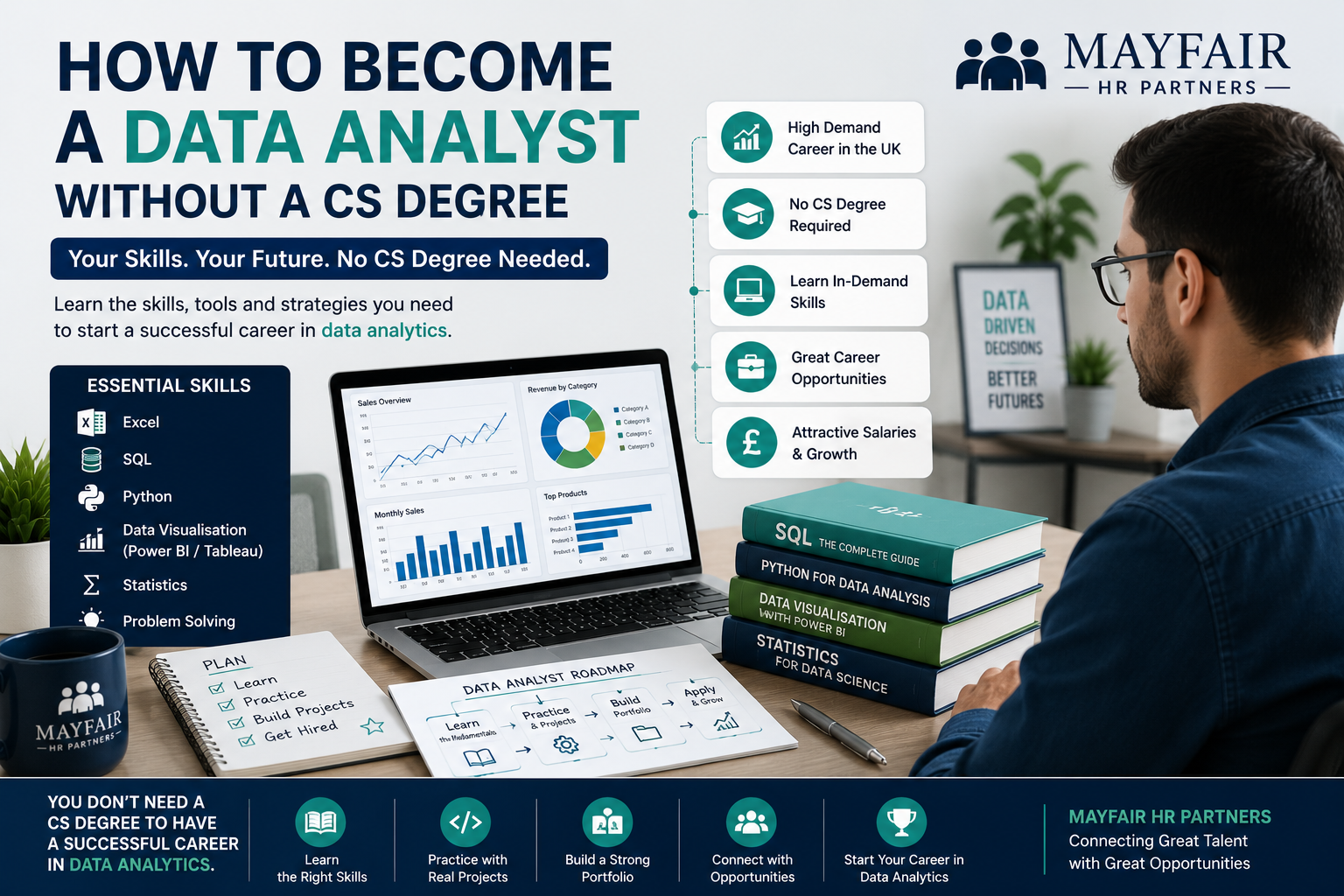
The demand for skilled data analysts has grown rapidly across the UK as organisations increasingly rely on data to make informed business decisions. From healthcare and finance to retail, technology and manufacturing, employers are looking for professionals who can collect, analyse and interpret data to identify trends, solve problems and support strategic planning. As a result, data analyst jobs UK have become some of the fastest-growing opportunities in today's employment market.
One of the biggest misconceptions about this profession is that you need a Computer Science degree to succeed. In reality, many successful data analysts come from backgrounds in business, finance, economics, engineering, marketing, mathematics and even completely unrelated fields. Employers are placing greater emphasis on practical skills, analytical thinking and real-world experience than on a specific academic qualification.
Understanding How to Become a Data Analyst Without a CS Degree can help aspiring professionals take advantage of these opportunities without returning to university for another degree. By learning the right tools, building a strong portfolio and gaining practical experience, candidates can develop the skills employers genuinely value.
At Mayfair HR Partners, we support professionals looking to transition into rewarding technology careers by connecting talented candidates with employers recruiting for data analyst jobs UK, business intelligence jobs UK and other analytical roles. Whether you are changing careers or searching for your first data-focused position, our recruitment specialists provide guidance to help you build a successful future in data analytics.
This guide explains How to Become a Data Analyst Without a CS Degree, the skills employers expect, practical learning pathways, industry-recognised certifications and the steps you can take to secure your first role in one of the UK's most exciting career sectors.
Why Data Analyst Careers Are Growing in the UK
Every organisation generates data, but only skilled professionals can transform that information into valuable business insights. Companies now use data to improve customer experiences, increase operational efficiency, reduce costs and make better strategic decisions.
Several factors continue driving demand for data analytics careers, including:
- Digital transformation
- Artificial Intelligence (AI)
- Business intelligence
- Cloud computing
- E-commerce growth
- Financial analytics
- Healthcare data management
- Marketing analytics
- Cybersecurity reporting
- Predictive analytics
Because of these developments, employers across almost every industry are recruiting professionals with strong data analytics skills.
The growing demand for analytical talent means career opportunities exist not only in technology companies but also within banking, healthcare, retail, logistics, education, government and manufacturing organisations.
Start Your Data Analyst Career with Mayfair HR Partners
Beginning a new career can feel overwhelming, particularly if you are moving into a technical profession without a Computer Science background. Fortunately, today's employers increasingly recognise practical ability, continuous learning and professional certifications alongside formal education.
At Mayfair HR Partners, we work with candidates from diverse educational and professional backgrounds who are looking to transition into data-focused careers. Our recruitment specialists understand what employers are looking for and help candidates identify opportunities that match their skills, experience and long-term ambitions.
Whether you are searching for:
- entry level data analyst jobs
- junior data analyst jobs
- remote data analyst jobs UK
- business intelligence jobs UK
- technology careers UK
our team supports you throughout your job search by providing recruitment guidance, market insights and access to exciting opportunities across the UK.
Can You Become a Data Analyst Without a Computer Science Degree?
The simple answer is yes.
A Computer Science degree is no longer the only route into data analytics. Many employers recruit candidates who demonstrate strong analytical thinking, technical skills and the ability to solve business problems using data.
Professionals commonly transition into data analytics from backgrounds including:
- Business
- Economics
- Finance
- Mathematics
- Statistics
- Marketing
- Accounting
- Engineering
- Physics
- Social Sciences
These individuals often possess transferable skills such as problem-solving, critical thinking and quantitative analysis, making them well suited to analytical roles.
By combining these strengths with technical knowledge in Excel, SQL, Python and data visualisation tools, candidates can successfully compete for data analyst jobs UK.
Why Employers Hire Skills Over Degrees
The technology recruitment market has changed significantly over the past decade. Employers increasingly focus on what candidates can demonstrate rather than simply which degree they hold.
When hiring data analysts, organisations typically assess:
- Technical skills
- Practical project experience
- Portfolio quality
- Communication skills
- Business understanding
- Problem-solving ability
- Data visualisation skills
- Analytical thinking
Candidates who can demonstrate these capabilities through practical projects and real-world examples often perform just as well as graduates with Computer Science degrees.
At Mayfair HR Partners, we regularly see employers recruiting professionals based on competence, curiosity and continuous learning rather than academic background alone.
Step-by-Step Guide: How to Become a Data Analyst Without a CS Degree
Changing careers into data analytics requires a structured learning plan. Rather than attempting to master every programming language or software platform, focus on developing the core skills most employers require.
The following roadmap provides a practical pathway for anyone looking to become a data analyst UK without studying Computer Science.
Step 1 – Learn Microsoft Excel
Excel remains one of the most widely used tools in business analytics.
Every aspiring data analyst should understand:
- Formulas
- Functions
- Pivot Tables
- Charts
- Conditional Formatting
- Data Cleaning
- Data Validation
- Lookup Functions
Strong Excel data analysis skills continue to be highly valued by employers across multiple industries.
Step 2 – Master SQL
Structured Query Language (SQL) is one of the most important technical skills for data analysts.
Employers expect candidates to retrieve, organise and analyse information stored in databases.
Important SQL topics include:
- SELECT statements
- WHERE clauses
- GROUP BY
- ORDER BY
- JOINs
- Aggregate Functions
- Subqueries
- Views
Learning SQL for data analysts significantly improves employability because databases remain central to modern business operations.
Step 3 – Learn Python for Data Analysis
Although Excel and SQL remain essential, Python has become one of the most valuable programming languages for data analytics.
Python is widely used for:
- Data cleaning
- Automation
- Statistical analysis
- Data visualisation
- Machine learning
- Predictive analytics
Popular Python libraries include:
- Pandas
- NumPy
- Matplotlib
- Seaborn
- Scikit-learn
Developing Python for data analysis skills allows professionals to work with larger datasets and perform more advanced analytical tasks than traditional spreadsheet software.
Step 4 – Understand Statistics and Business Analysis
Successful data analysts do more than generate reports they explain what the data means and help organisations make informed decisions.
Learning fundamental statistical concepts such as averages, distributions, correlations, trends and probability enables analysts to interpret information accurately and communicate insights with confidence.
Business understanding is equally important because employers want professionals who can connect technical findings with real commercial objectives.
Continue Building Your Data Analyst Skills with Mayfair HR Partners
After developing a solid understanding of Excel, SQL, Python and statistics, the next step is learning how to present data in a meaningful way. Modern employers expect data analysts to transform complex information into clear visual reports that support business decisions.
At Mayfair HR Partners, we regularly see employers prioritising candidates who combine technical knowledge with the ability to communicate insights through professional dashboards and business reports. These practical skills help applicants stand out when applying for data analyst jobs UK.
Step 5 – Learn Power BI
Microsoft Power BI has become one of the most widely used business intelligence tools across the UK.
Employers use Power BI to:
- Build interactive dashboards
- Create business reports
- Monitor KPIs
- Analyse sales performance
- Visualise trends
- Support strategic planning
Learning Power BI should include:
- Data modelling
- Power Query
- DAX basics
- Dashboard design
- Report publishing
- Data visualisation best practices
Demand for professionals with Power BI experience continues to grow, particularly in finance, retail, healthcare and manufacturing.
Step 6 – Learn Tableau
Tableau is another leading data visualisation platform used by organisations worldwide.
It enables analysts to:
- Create interactive dashboards
- Build visual reports
- Analyse large datasets
- Present business insights
- Support executive decision-making
Strong Tableau skills are highly regarded because employers value professionals who can explain complex information through clear, engaging visualisations.
Step 7 – Build a Professional Portfolio
A portfolio is often more valuable than a degree when applying for entry level data analyst jobs.
Recruiters and hiring managers want evidence that you can work with real data and solve practical business problems.
Your portfolio should include projects such as:
- Sales analysis dashboards
- Customer behaviour analysis
- Marketing campaign reports
- Financial data analysis
- Healthcare datasets
- Public government datasets
- Business intelligence dashboards
- Data cleaning projects
Publish your work on GitHub or create a personal portfolio website. Include clear explanations of your objectives, methodology and conclusions to demonstrate both technical ability and communication skills.
At Mayfair HR Partners, we encourage candidates to showcase practical work because employers consistently value real-world projects alongside formal qualifications.
Step 8 – Complete Professional Certifications
Industry-recognised certifications strengthen your CV and demonstrate commitment to continuous learning.
Although certifications cannot replace practical experience, they help validate your knowledge and improve your credibility with employers.
Some of the most respected options include:
- Google Data Analytics Certificate
- IBM Data Analyst Professional Certificate
- Microsoft Power BI Data Analyst Associate
- Microsoft Excel Expert
- Tableau Desktop Specialist
Completing one or more of these certifications can significantly improve your chances of securing junior data analyst jobs.
Step 9 – Apply for Entry-Level Roles
Once you have developed your technical skills and built a portfolio, begin applying for suitable opportunities.
Typical entry-level roles include:
- Junior Data Analyst
- Business Intelligence Analyst
- Reporting Analyst
- Data Technician
- Marketing Data Analyst
- Operations Analyst
- Financial Data Analyst
These positions provide valuable commercial experience while allowing you to continue developing advanced analytical skills.
Essential Skills Employers Want in Data Analysts Mayfair HR Partners Insights
Successful data analysts combine technical expertise with strong communication and business awareness.
The most valuable data analytics skills include:
Technical Skills
- Microsoft Excel
- SQL
- Python
- Power BI
- Tableau
- Data Cleaning
- Data Modelling
- Statistics
- Data Visualisation
- Business Intelligence
Professional Skills
- Critical thinking
- Problem-solving
- Communication
- Attention to detail
- Business awareness
- Time management
- Teamwork
- Curiosity
- Presentation skills
- Continuous learning
At Mayfair HR Partners, we consistently see employers seeking candidates who can not only analyse data but also explain their findings to managers, clients and stakeholders in a clear and meaningful way.
Best Certifications for Aspiring Data Analysts
Professional certifications provide structured learning and demonstrate your commitment to developing relevant industry skills.
Google Data Analytics Professional Certificate
One of the most popular entry-level certifications covering:
- Data cleaning
- SQL
- Excel
- Tableau
- Data visualisation
- Analytical thinking
It is an excellent starting point for individuals changing careers.
IBM Data Analyst Professional Certificate
This programme introduces learners to:
- Python
- SQL
- Excel
- Data visualisation
- Databases
- Analytical techniques
It combines theoretical knowledge with practical projects suitable for building a portfolio.
Microsoft Power BI Data Analyst Associate
Designed for professionals who want to demonstrate expertise in Power BI, dashboard development and business intelligence reporting.
Employers increasingly value this certification due to Microsoft's widespread adoption across UK businesses.
Microsoft Excel Expert
Although often overlooked, advanced Excel certification remains valuable because many organisations continue using Excel for reporting, forecasting and financial analysis.
Mastering Excel alongside SQL and Power BI creates a strong technical foundation.
Data Analyst Salary UK Mayfair HR Partners Career Guide
Data analytics remains one of the UK's fastest-growing and best-paid technology professions.
Approximate annual salaries include:
|
Job Role |
Average Annual Salary |
|
Junior Data Analyst |
£28,000–£35,000 |
|
Data Analyst |
£35,000–£50,000 |
|
Business Intelligence Analyst |
£45,000–£60,000 |
|
Senior Data Analyst |
£55,000–£75,000 |
|
Lead Data Analyst |
£75,000–£95,000+ |
|
Analytics Manager |
£85,000–£110,000+ |
Salary levels vary depending on experience, technical expertise, location and industry. Professionals with skills in SQL, Python, Power BI and cloud analytics are often able to command higher salaries than those with spreadsheet-based experience alone.
Beyond salary, many employers also offer:
- Hybrid and remote working
- Pension schemes
- Annual bonuses
- Professional development funding
- Certification support
- Flexible working arrangements
- Career progression opportunities
At Mayfair HR Partners, we encourage candidates to consider both salary and long-term career growth when evaluating job opportunities. Organisations that invest in training, mentoring and continuous learning often provide the strongest foundation for building a successful career in data analytics.
Common Mistakes Beginners Make When Becoming a Data Analyst
Many aspiring professionals delay applying for data analyst jobs UK because they believe they need to master every programming language or earn a Computer Science degree first. In reality, employers value practical skills, analytical thinking and a willingness to learn far more than an extensive list of qualifications.
Some of the most common mistakes include:
- Focusing on too many tools instead of mastering Excel, SQL and Python.
- Building a CV without creating a portfolio of real projects.
- Ignoring business knowledge and communication skills.
- Applying for senior roles before gaining practical experience.
- Neglecting data visualisation skills using Power BI or Tableau.
- Failing to keep learning as technology evolves.
Avoiding these mistakes will help you build a stronger profile and improve your chances of securing entry level data analyst jobs.
Why Professionals Choose Mayfair HR Partners
Starting a career in data analytics can be challenging, particularly for candidates changing careers or entering the technology sector without a Computer Science degree. Working with an experienced recruitment partner can make the journey much easier.
At Mayfair HR Partners, we help talented professionals connect with employers recruiting for data analyst jobs UK, business intelligence jobs UK and other technology-focused positions. Our recruitment specialists understand the skills employers expect and provide guidance throughout every stage of the recruitment process, from CV preparation and interview advice to identifying opportunities that match your experience and career ambitions.
Whether you are searching for your first analytical role or looking to progress into a more senior position, Mayfair HR Partners is committed to helping you build a successful and rewarding career in data analytics.
Frequently Asked Questions About How to Become a Data Analyst Without a CS Degree
Can I become a data analyst without a Computer Science degree?
Yes. Many employers prioritise practical skills, certifications and project experience over a specific academic degree.
Which skills are most important for beginners?
Excel, SQL, Python, Power BI, Tableau, statistics and data visualisation are among the most valuable skills.
Are certifications useful?
Yes. Certifications such as the Google Data Analytics Certificate and Microsoft Power BI certification can strengthen your CV and demonstrate your commitment to learning.
Where can I find data analyst opportunities in the UK?
You can explore data analyst jobs UK, junior data analyst jobs and related technology careers through Mayfair HR Partners, where employers recruit talented professionals from a wide range of educational backgrounds.
Conclusion
Understanding How to Become a Data Analyst Without a CS Degree proves that a successful career in data analytics is achievable without following a traditional Computer Science pathway. By learning Excel, SQL, Python and data visualisation tools, building a professional portfolio and gaining recognised certifications, you can develop the practical skills employers genuinely value.
As businesses continue investing in data-driven decision-making, demand for skilled analysts will remain strong across industries including finance, healthcare, retail, technology and manufacturing. This creates excellent opportunities for career changers, graduates and self-taught professionals willing to invest in continuous learning and practical experience.
At Mayfair HR Partners, we are dedicated to helping ambitious professionals connect with leading employers across the UK. Whether you are searching for your first data analyst jobs UK role or planning the next step in your analytics career, our experienced recruitment consultants are here to help you discover opportunities that match your skills, ambitions and long-term career goals